📖 Reading time: 10 min
Quick answer: Rumi and Hafez are two different Persian poets who never met. Rumi (1207–1273) lived in Konya and wrote the six-book Masnavi of teaching stories; Hafez (c. 1315–1390) lived in Shiraz and wrote about 500 short, polished ghazals. Rumi is the ecstatic teacher, Hafez the ironic lyric master.
Who this is for: readers who love Rumi and want to know Hafez, anyone wondering whether Rumi and Hafez are the same person, and Persian learners deciding which poet to read first.
Rumi and Hafez are the two Persian poets most people outside Iran have heard of, and they are often mixed up, quoted together, or even assumed to be the same man. They were born almost a century apart, in different cities, and wrote very different kinds of poetry.
Rumi died in Konya, in today’s Turkey, in 1273 (Britannica). Hafez was born in Shiraz around 1315, roughly four decades later, and died there around 1390 (Encyclopaedia Iranica). Both wrote in Persian, both drew on the Sufi tradition, and both are loved by Persian readers today.
This guide compares the two side by side: their lives, their main works, their forms and styles, a famous opening from each, and which one to read first.
Rumi and Hafez at a glance
Here is how Rumi and Hafez compare on the basics.
| Rumi | Hafez | |
|---|---|---|
| Full name | Jalal al-Din Mohammad Rumi (Mowlana) | Khwaja Shams al-Din Mohammad Hafez-e Shirazi |
| Born | c. 1207, Balkh (now in Afghanistan) | c. 1315, Shiraz (dates vary by source) |
| Died | 1273, Konya (now in Turkey) | c. 1390, Shiraz |
| Main works | The Masnavi (Masnavi-ye Ma’navi, “Spiritual Couplets”), six books; the Divan-e Shams | The Divan, about 500 ghazals |
| Main forms | The masnavi (long poem in rhyming couplets) and the ghazal | The ghazal |
| Voice | Ecstatic, teaching, full of stories and parables | Polished, ironic, ambiguous, witty |
| Typical theme | The soul’s longing to return to God | Love, wine and the hypocrisy of the pious, on several levels at once |
| Where to see him today | Konya, where his tomb is a museum and shrine | Shiraz, at the Hafezieh garden tomb |
Sources: Britannica, Rumi; Britannica, Hafez; Iranica, Hafez ii.
Two lives, two cities
Rumi: from Balkh to Konya
Rumi was born around 1207 in Balkh and moved west with his family; in 1228 they were invited to Konya in Anatolia, then called Rum, which gave him the name Rumi (Britannica). He became a teacher and preacher there, and his meeting with the wandering mystic Shams of Tabriz transformed his life and poetry.
Hafez: a life in Shiraz
Hafez spent almost his whole life in Shiraz in southern Iran. He served several of the city’s rulers as a court poet; Encyclopaedia Iranica describes his patrons, from the cultured Abu Eshaq Inju to the Mozaffarid Shah Shoja (Iranica). His name means “one who knows the Qur’an by heart”, and his poems combine deep learning with sharp wit.
Because Rumi died decades before Hafez was born, the two never met. But Hafez grew up in a Persian world already shaped by Rumi’s generation of mystical poets, and both drew on the same Sufi vocabulary of love, wine and the beloved.
The Masnavi and the Divan: different forms
The biggest difference between Rumi and Hafez is form. Rumi’s masterpiece, the Masnavi, is a vast poem in rhyming couplets that tells story after story; Hafez’s Divan is a collection of short, self-contained ghazals.
- The masnavi form rhymes each couplet internally (AA, BB, CC), so a poem can run on almost without end. Rumi uses it to teach through parables, digressions and commentary across six books.
- The ghazal form uses one rhyme for the whole poem, often with a repeated end word (radif), and usually closes with the poet naming himself. Hafez’s ghazals typically run to about 7 to 13 couplets.
- Rumi wrote ghazals too. His Divan-e Shams, named for Shams of Tabriz, is a huge collection of ecstatic ghazals, so “Divan” alone does not tell you which poet you are reading.
The result is a different reading experience. Reading Rumi’s Masnavi is like listening to a great teacher who tells a story, stops to explain it, and tells another. Reading Hafez is like turning a jewel: each ghazal is short, but every couplet catches the light from a new angle, and the meaning shifts as you read.
Two famous openings compared
Compare the opening lines of their best-known books. Rumi’s Masnavi begins with the song of the reed flute, cut from its reed bed:
بشنو این نی چون شکایت میکند
از جداییها حکایت میکندBeshno in ney chon shekayat mikonad / az jodayi-ha hekayat mikonad
“Listen to this reed, how it complains,
telling the story of separations.”
Hafez’s Divan opens with a call to the cupbearer, half in Arabic:
اَلا یا اَیُّهَا السّاقی اَدِرْ کَأسَاً و ناوِلْها
که عشق آسان نمود اوّل ولی افتاد مشکلهاAla ya ayyoha-s-saqi, ader ka’san va navelha / ke eshq asan nemud avval vali oftad moshkel-ha
“O cupbearer, pass the cup around and hand it to me,
for love looked easy at first, but then came the difficulties.”
Both openings are about the pain of love and separation. Rumi turns it into a story and a lesson: the reed weeps because it longs for its origin, as the soul longs for God. Hafez turns it into a moment: a cup, a cry, and a wry admission that love is harder than it looked. That contrast, teacher and lyricist, runs through all their work.
Which should you read first, Rumi or Hafez?
Read Rumi first if you want stories and spiritual teaching; read Hafez first if you want short, beautiful poems you can memorize and quote. Many readers move from one to the other.
- Choose Rumi if you enjoy parables, want a spiritual guide, or are drawn to Sufism. Start with the stories of the Masnavi: our Tales From Masnavi retells Rumi’s best-known stories in prose, and the six-volume Persian–English Mathnawi holds the full text.
- Choose Hafez if you love lyric poetry, want lines to quote at weddings and on Yalda, or enjoy irony and wordplay. Start with a few ghazals in a bilingual edition, such as our Divan-i Hafiz.
- If you are learning Persian, Rumi’s Masnavi stories are often easier to follow because the narrative carries you, while Hafez rewards slow study of every word.
- If you met them through popular books, know that many viral “Rumi” and “Hafiz” quotes are modern English poems. For Hafez, see which Hafiz quotes are real.
For a deeper start on each poet, read our guide to Rumi: life, Masnavi and poems and our guide to Hafez (Hafiz Shirazi): life, poems and Divan.
Frequently asked questions about Rumi and Hafez
Are Rumi and Hafez the same person?
No, Rumi and Hafez are two different Persian poets. Rumi was born around 1207 and died in Konya in 1273, while Hafez was born in Shiraz around 1315 and died there around 1390. They lived in different cities and different centuries, and never met.
Who is the better poet, Rumi or Hafez?
Neither is better; they excel at different things. Rumi is the great mystical teacher, whose Masnavi tells stories to explain the soul's journey, while Hafez is the master of the short lyric ghazal, admired for polish, irony and ambiguity. Iranians love and quote both.
Did Hafez know Rumi's poetry?
Rumi died decades before Hafez was born, so they never met. Both wrote in Persian within the same Sufi literary tradition and share much of its vocabulary of love, wine and the beloved, which is why their poems are often read and quoted side by side.
What is the difference between the Masnavi and the Divan?
The Masnavi is Rumi's long poem in six books, written in rhyming couplets and full of stories. The Divan of Hafez is a collection of about 500 short ghazals. Rumi also has a Divan, the Divan-e Shams, a large collection of his own ghazals.
Should I read Rumi or Hafez first?
Read Rumi first if you want stories and spiritual teaching, and Hafez first if you want short, beautiful poems to memorize and quote. Persian learners often find Rumi's narrative easier to follow, while Hafez rewards slow, word-by-word reading in a bilingual edition.
📚 More from Persian Bell
🎯 Recommended Book
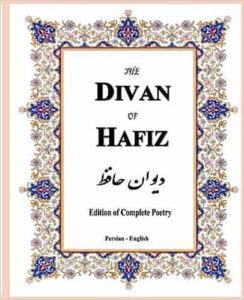
Divan-i Hafiz – Complete Ghazals of Hafez, Persian–English Bilingual Edition — $17.50
Category: Hafez, All Books
The complete Divan of Hafez with the Persian text and H. Wilberforce Clarke’s English translation side by side, in one 462-page edition.
Key takeaways
- Rumi (1207–1273, Konya) and Hafez (c. 1315–1390, Shiraz) are different poets who never met.
- Rumi’s masterpiece is the Masnavi, six books of teaching stories in couplets; Hafez’s is the Divan of about 500 ghazals.
- Rumi teaches through stories; Hafez works through irony, music and ambiguity.
- Many readers start with one and end up loving both.
Rumi and Hafez are the two great doors into Persian poetry. Open one tonight: a story from the Tales From Masnavi, or a ghazal from the Divan-i Hafiz.