📖 Reading time: 12 min
Quick answer: Many of the most shared “Hafiz quotes” come from Daniel Ladinsky’s books, such as The Gift (1999), which Ladinsky himself says are not translations. Real Hafez quotes can be traced to a numbered ghazal in the Persian Divan; below are 12 of them, with the Persian and a literal translation.
Who this is for: anyone about to quote Hafiz in a speech, card, tattoo or post, readers who loved The Gift and want the real Hafez, and Persian learners who want famous lines to memorize.
If you have ever shared a gentle, modern-sounding “Hafiz” poem about God, the moon or the sun, there is a good chance Hafez never wrote it. The real Hafez is just as quotable, but his lines sound very different.
Hafez (Hafiz of Shiraz, c. 1315–1390) wrote in 14th-century Persian, and every genuine line of his belongs to a ghazal in his Divan, numbered in the standard Qazvini–Ghani edition. Many popular English “Hafiz” quotes cannot be matched to any ghazal at all, because they come from new poems written in English in the 1990s and 2000s.
This guide explains where those quotes come from, how to check whether a Hafiz quote is real, and gives you 12 genuine Hafez quotes on love, hope, patience and life, each with its Persian original and ghazal number.
Where most “Hafiz quotes” come from: Daniel Ladinsky
Most viral “Hafiz” quotes in English come from the books of the American poet Daniel Ladinsky, who has published several collections under Hafiz’s name since the 1990s.
- I Heard God Laughing (1996), subtitled “Renderings of Hafiz” (Biblio).
- The Subject Tonight Is Love (1996).
- The Gift (Penguin, 1999), the best known (Penguin Random House).
- A Year with Hafiz (Penguin, 2011), a book of daily readings (Penguin Random House).
Ladinsky has been open about what these are. His website says: “My poems are not translations in a literal or scholarly sense” (danielladinsky.com). Some much-shared titles, such as “With That Moon Language”, appear in his anthology Love Poems from God (2002) (The Sun Magazine).
What scholars say
Scholars of Persian are blunter. Omid Safi, director of the Duke Islamic Studies Center, calls the poems “fake” and quotes the scholar Christopher Shackle describing them as “not so much a paraphrase as a parody” of Hafez (Al Jazeera, 2020). Aria Fani, writing from UC Berkeley, notes that “Ladinsky does not know Persian” (Ajam Media Collective, 2014).
None of this makes Ladinsky’s poems bad poetry. It means they should be credited to Ladinsky, and that readers who want Hafez himself need to look elsewhere. For the poet’s life and work, see Hafez (Hafiz Shirazi): life, poems and Divan.
How to check if a Hafiz quote is real
A real Hafez quote can always be traced to a specific ghazal in the Persian Divan. If no one can tell you which ghazal it comes from, treat it with suspicion. Use these checks:
- Ask for the ghazal number. Genuine quotes come with a source such as “ghazal 255” in the Qazvini–Ghani edition. A book title alone, especially The Gift or A Year with Hafiz, is not a source for Hafez.
- Look for the Persian. Search the Persian text of the Divan on Ganjoor. If no Persian original exists anywhere, the quote is not by Hafez.
- Listen for the couplet. Hafez wrote in rhymed, metered couplets. A real quote is usually one or two lines with a clear balance, not a long free-verse paragraph.
- Watch for modern voice. Casual slang, jokes about modern life and phrases like “dear” or “my sweet” in a chatty tone are signs of a modern English poem, not a 14th-century ghazal.
- Check the translator. Quotes from Clarke, Bell, Arberry, Avery or Davis are translations. Quotes from Ladinsky’s books are his own poems inspired by Hafez.
- Ask a Persian reader. Any Iranian who knows Hafez can usually tell in seconds whether a line sounds like him.
When you find a line you love that turns out to be Ladinsky’s, you can still use it: just credit it as “Daniel Ladinsky, inspired by Hafiz”.
12 real Hafez quotes with the Persian original
Every quote below comes from the Persian Divan, with the ghazal number so you can check it, and our own literal translation. Persian text from Ganjoor.
- On love (ghazal 317)
فاش میگویم و از گفتهٔ خود دلشادَم
بندهٔ عشقم و از هر دو جهان آزادم“I say it openly, and I am glad of what I say: I am the servant of love, and free of both worlds.” - On love (ghazal 52)
روزْگاریست که سودایِ بُتان، دینِ من است
غَمِ این کار، نِشاطِ دِلِ غَمْگینِ من است“For a long time now, longing for the beautiful ones has been my religion; the sorrow of it is the joy of my sorrowing heart.” - On love (ghazal 1)
اَلا یا اَیُّهَا السّاقی اَدِرْ کَأسَاً و ناوِلْها
که عشق آسان نمود اوّل ولی افتاد مشکلها“O cupbearer, pass the cup around and hand it to me, for love looked easy at first, but then came the difficulties.” - On hope (ghazal 255)
یوسفِ گمگشته بازآید به کنعان، غم مخور
کلبهٔ احزان شَوَد روزی گلستان، غم مخور“Lost Joseph will come back to Canaan; do not grieve. The house of sorrows will one day become a rose garden; do not grieve.” - On hope (ghazal 147)
بریدِ بادِ صبا دوشم آگهی آورد
که روزِ محنت و غم رو به کوتهی آورد“Last night the courier of the morning breeze brought me news that the day of hardship and grief is drawing to its end.” - On patience (ghazal 8)
صبر کن حافظ به سختی روز و شب
عاقبت روزی بیابی کام را“Be patient, Hafez, through hardship day and night; in the end, one day, you will find what you desire.” - On life (ghazal 37)
بیا که قصرِ اَمَل سخت سستبنیادست
بیار باده که بنیادِ عمر بر بادست“Come, for the palace of hope stands on very weak foundations; bring wine, for the foundation of life is built on the wind.” - On pride (ghazal 81)
صبحدم مرغ چمن با گل نوخاسته گفت
ناز کم کن که در این باغ بسی چون تو شکفت“At dawn the meadow bird said to the newly opened rose: be less proud, for many like you have bloomed in this garden.” - On hypocrisy (ghazal 230)
اگر به بادهٔ مُشکین دلم کشد، شاید
که بویِ خیر ز زهدِ ریا نمیآید“If my heart is drawn to musk-scented wine, that is fitting, for no scent of good comes from hypocritical piety.” - On memory (ghazal 204)
یاد باد آن که نَهانَت نظری با ما بود
رَقَمِ مِهرِ تو بر چهرهٔ ما پیدا بود“Remember the time when you secretly looked on us with favor; the mark of your love was plain upon our face.” - On talent (ghazal 37)
حسد چه میبری ای سستنظم بر حافظ؟
قبولِ خاطر و لطفِ سخن خدادادست“Why envy Hafez, you weak versifier? Winning hearts and grace of speech are gifts from God.” - On longing (ghazal 168)
گداخت جان که شود کارِ دل تمام و نشد
بسوختیم در این آرزویِ خام و نشد“My soul melted so the heart’s affair might be settled, and it was not; we burned in this unripe wish, and it was not.”
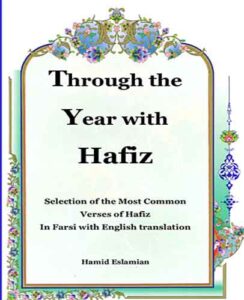
These quotes are literal on purpose, so you can see what Hafez actually says. For the context of each poem, see our collection of Hafez poems in English. If you want a genuine Hafez line for every day of the year, our Through the Year with Hafiz gives you a short Hafez poem a day in Persian and English, the real thing in daily form.
Should you still read Ladinsky?
Yes, if you enjoy his poems, but read them as Ladinsky’s poetry, not as Hafez. Many readers first came to Persian poetry through The Gift, and that curiosity is worth following all the way to the source.
The next step is a faithful translation. Peter Avery’s Collected Lyrics, Dick Davis’s Faces of Love and the classic complete translation by H. Wilberforce Clarke all let you hear Hafez himself. Our guide to the Divan of Hafez and its English translations compares them, and Persian Bell’s Divan-i Hafiz sets the Persian beside Clarke’s complete English version.
Frequently asked questions about Hafiz quotes
Is The Gift by Hafiz real?
The Gift (1999) is a real book, but its poems are not translations of Hafez. They are modern English poems by Daniel Ladinsky, inspired by Hafez. Ladinsky's own website says his poems are not translations in a literal or scholarly sense, and scholars of Persian say the lines cannot be found in the Divan.
Did Hafiz write With That Moon Language?
No. "With That Moon Language" is a poem by Daniel Ladinsky, published in his anthology Love Poems from God (2002) and widely shared as a Hafiz quote. It has no known source in the Persian Divan of Hafez, so it should be credited to Ladinsky, inspired by Hafiz.
What is a famous real Hafez quote about love?
A famous real Hafez quote about love is "I am the servant of love, and free of both worlds", from ghazal 317 of the Divan. Another is the opening of the Divan: "Love looked easy at first, but then came the difficulties". Both can be checked in the Persian on Ganjoor.
Is A Year with Hafiz a translation?
A Year with Hafiz (2011) is a book of daily readings by Daniel Ladinsky in the same style as The Gift, and it is not a literal translation of the Divan. For a genuine Hafez poem for every day, look for a bilingual daily selection with the Persian text beside the English.
How can I tell if a Hafiz quote is fake?
Ask for the ghazal number and the Persian original. A real Hafez quote can be traced to a numbered ghazal in the Divan and found in Persian, for example on Ganjoor. If a quote only appears in English, sounds modern and conversational, or comes from a Ladinsky book, it is not by Hafez.
📚 More from Persian Bell
🎯 Recommended Book
Through the Year with Hafiz – 365 Daily Hafez Poems, Persian & English — $10.00
Category: Hafez, All Books
A short poem of Hafez for every day of the year, in Persian with an English translation.
Key takeaways
- Many viral “Hafiz quotes” come from Daniel Ladinsky’s books, which he says are not translations.
- A real Hafez quote can always be traced to a numbered ghazal in the Persian Divan.
- Check the Persian, the ghazal number and the translator before you quote.
- Credit Ladinsky’s poems to Ladinsky; read Hafez in a faithful or bilingual translation.
The real Hafez is worth the search. Start with the 12 quotes above, and when you want a genuine Hafez line every morning, open Through the Year with Hafiz.
Guides in this series
Sources
- Daniel Ladinsky, official website
- Penguin Random House, The Gift
- Penguin Random House, A Year with Hafiz
- Biblio, I Heard God Laughing (1996)
- The Sun Magazine, Daniel Ladinsky poems
- Omid Safi, "Fake Hafez", Al Jazeera (2020)
- Aria Fani, "Rewriting Hafez", Ajam Media Collective (2014)
- Ganjoor, Divan of Hafez